
I recently visited Elgin Fire Station and met Alan Weston, Station Commander (Rota Group 3) for Aberdeen City, Aberdeenshire and Moray. From the moment we started talking, it was clear how passionate Alan is about the fire service and the people who work within it.
The station was unusually quiet when I arrived, which turned out to be because the crew were already out on a call. They returned briefly, and just ten minutes later the alarm sounded again. In just one minute and twenty seconds, the crew were changed, in the appliance, and out the door. A second, on-call appliance followed within five minutes. The speed and coordination were genuinely impressive.
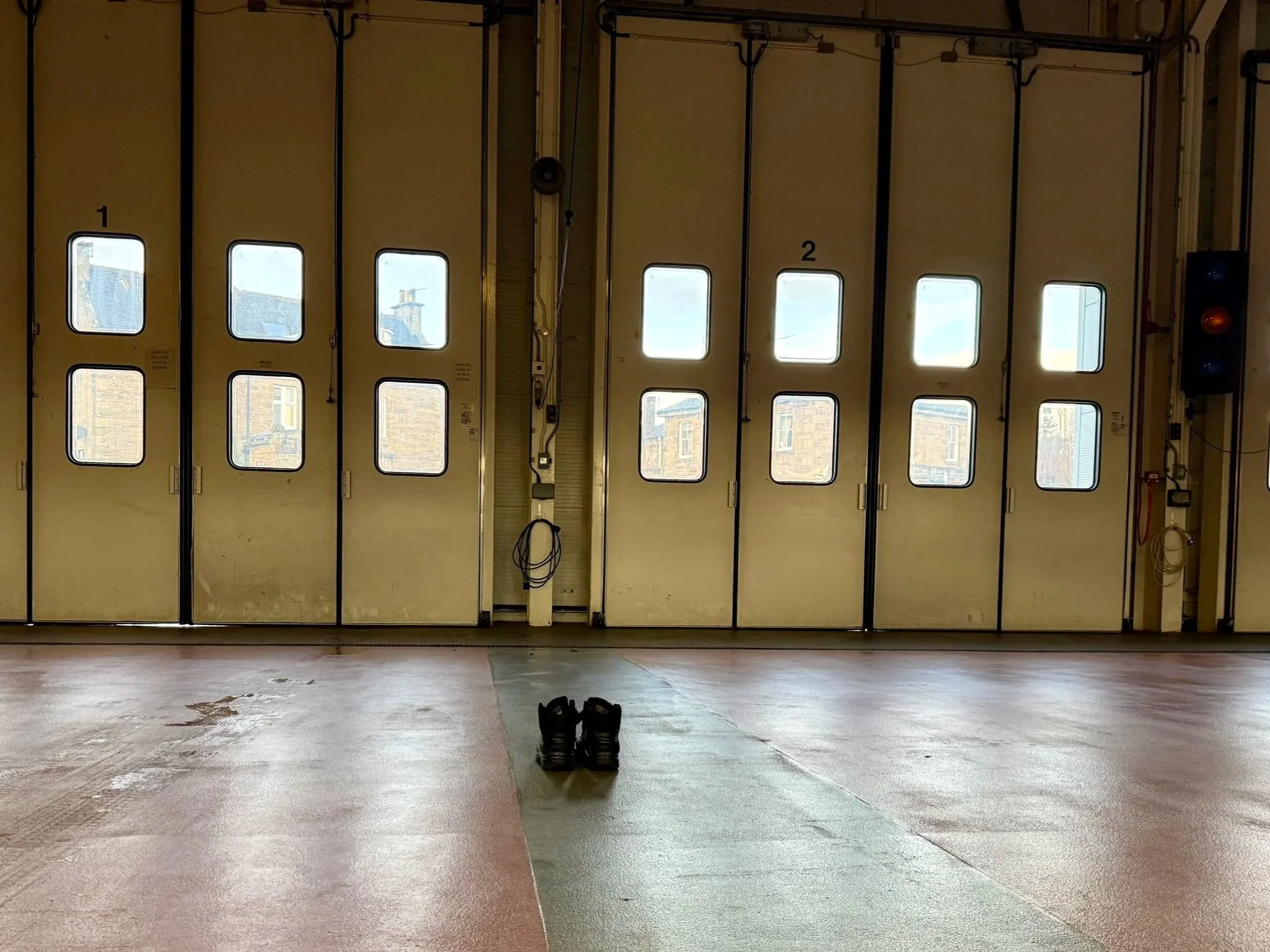
All that remained after the bustle of a call out.
Elgin Fire Station is a central hub and its role goes far beyond what many of us still think of as firefighting. Alongside responding to fires, crews here are trained in water rescue, wildfire response and managing major flooding incidents using a high-volume pump. The station also hosts a dedicated wildfire unit, reflecting the growing risk of wildfires across Moray and the wider area.
We talked about how wildfire response has changed in recent years. Rather than relying solely on water, firefighters now use more tactical approaches, including specialist equipment to create fire breaks and control how a fire spreads. There has been significant learning, particularly through working closely with landowners, and partnership working came up again and again.
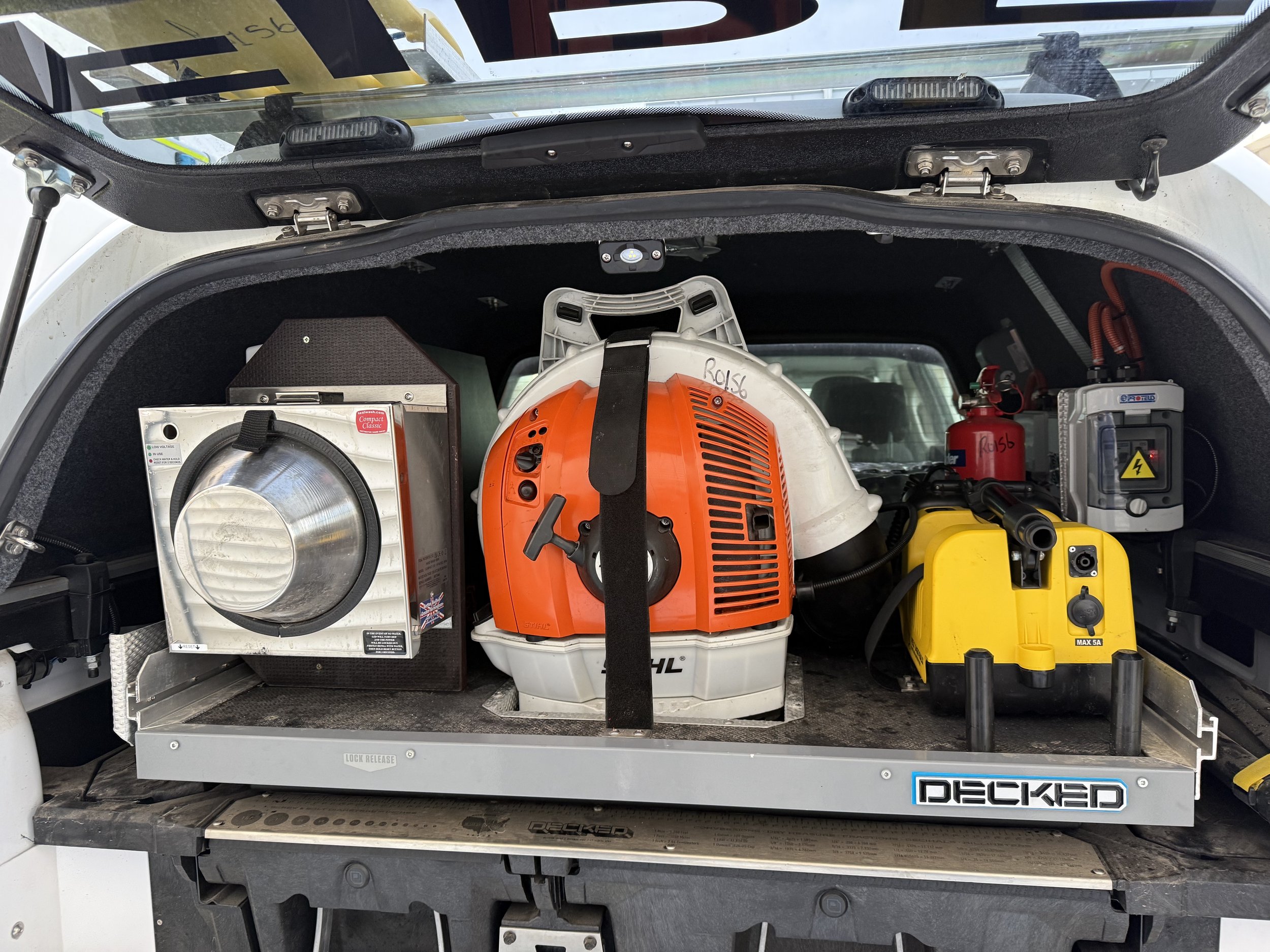
Specialist equipment used to create fire breaks and control the spread of wildfires.
One of the highlights of the visit was seeing a small off-road response vehicle, often described as looking like a “moon buggy”. It can reach areas that full-size fire engines simply can’t, making it invaluable for rural locations, rough terrain and wildfire response.
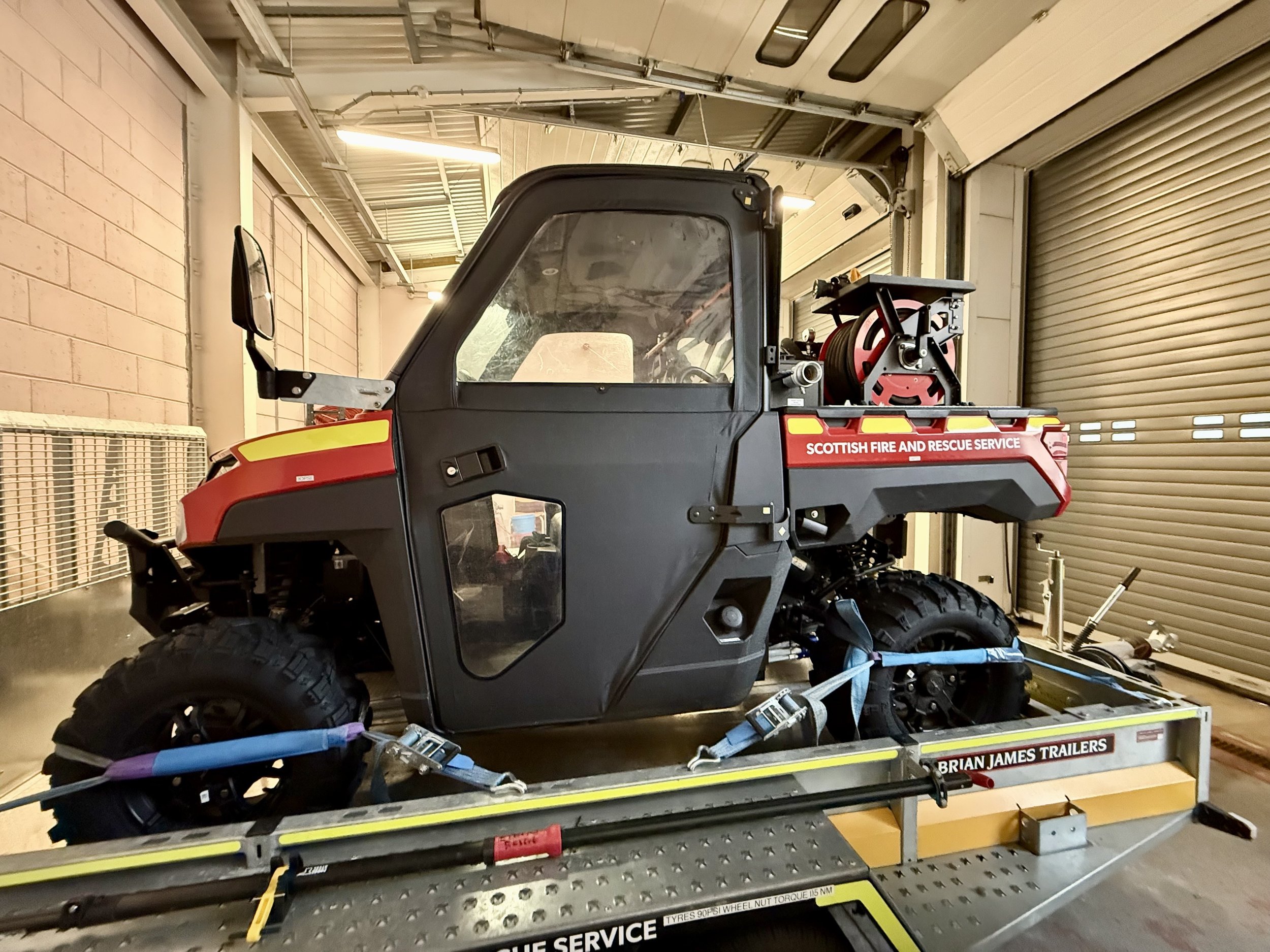
A specialist off-road unit that can reach places full-size fire engines simply can’t.
Climate change is already affecting the work of the fire service. Wildfires, flooding and extreme weather events are becoming more common, while thankfully house fires have decreased. This shift means the fire service continues to adapt, train differently and plan for increasingly complex risks.
The station itself is also adapting, with solar panels and sensor-controlled lighting helping to reduce energy use when crews are responding to calls.
I left the station impressed, reassured, and with a much better understanding of how the fire service is adapting to a changing climate and increasingly complex risks.
You can find useful information on outdoor safety and wildfire prevention on the Scottish Fire and Rescue Service website:
https://www.firescotland.gov.uk/outdoors/