
Community Payback & Climate Action: Growing Skills, Growing Impact
What does community payback really look like?
When you think of community justice or community payback, do you automatically picture people picking up litter at the side of the road?
Aye… most of us probably do.
And to be fair, in parts of Scotland, that is exactly what happens.
But this month, I was invited to visit the community payback team’s garden and workshop, along with the Moray Council Climate team, and I realised very quickly just how much more there is to the story.
A community payback garden? Oh yes. And the work they’re doing is something else.
When we arrived, the sun was shining (always helps), and the place was buzzing — literally. Bees, butterflies, insects everywhere. Raised beds full of life, alongside areas where nature had just been left to do its thing. It felt calm, purposeful…and genuinely cared for.
There’s a big polytunnel at the heart of it, with some brilliant graffiti artwork at the front — it gives the whole space a bit of personality. Not just functional, but welcoming. A place you’d actually want to spend time.
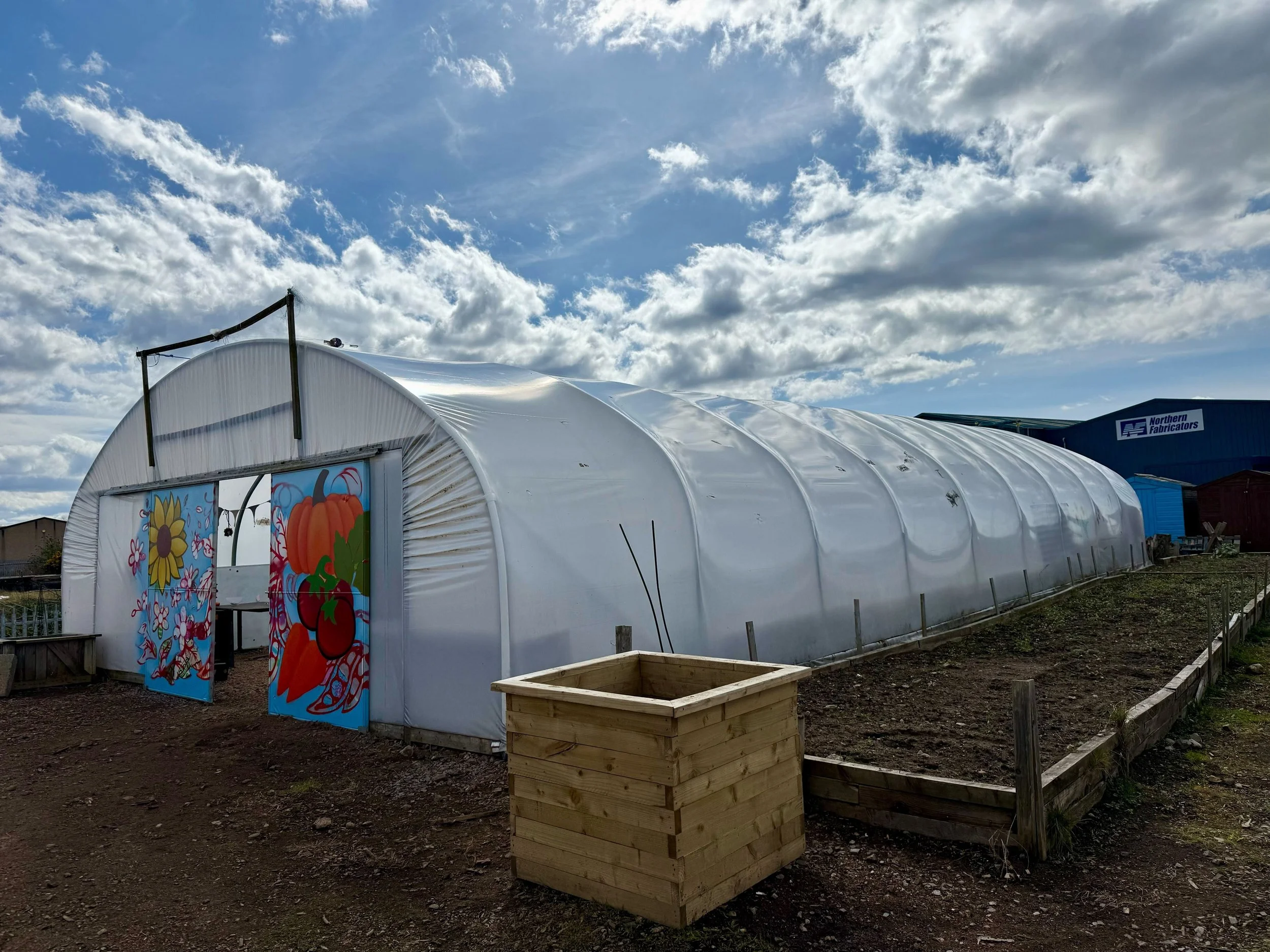
Polytunnel in action; more than just growing food!
We were met by Peter, who was absolutely full of enthusiasm. You could tell straight away this is more than just a job to him. He’s proud of what they’ve built here, and rightly so. It’s the only community payback team in Scotland doing something like this.
As we walked around, he talked about the challenges too. The site isn’t connected to power, which limits what they, and the other community groups using the space, can do. Solar panels would make a huge difference here, opening up more opportunities for everyone.
Because this place isn’t just about growing plants. It’s about growing confidence, skills, friendships… and a real sense of pride.
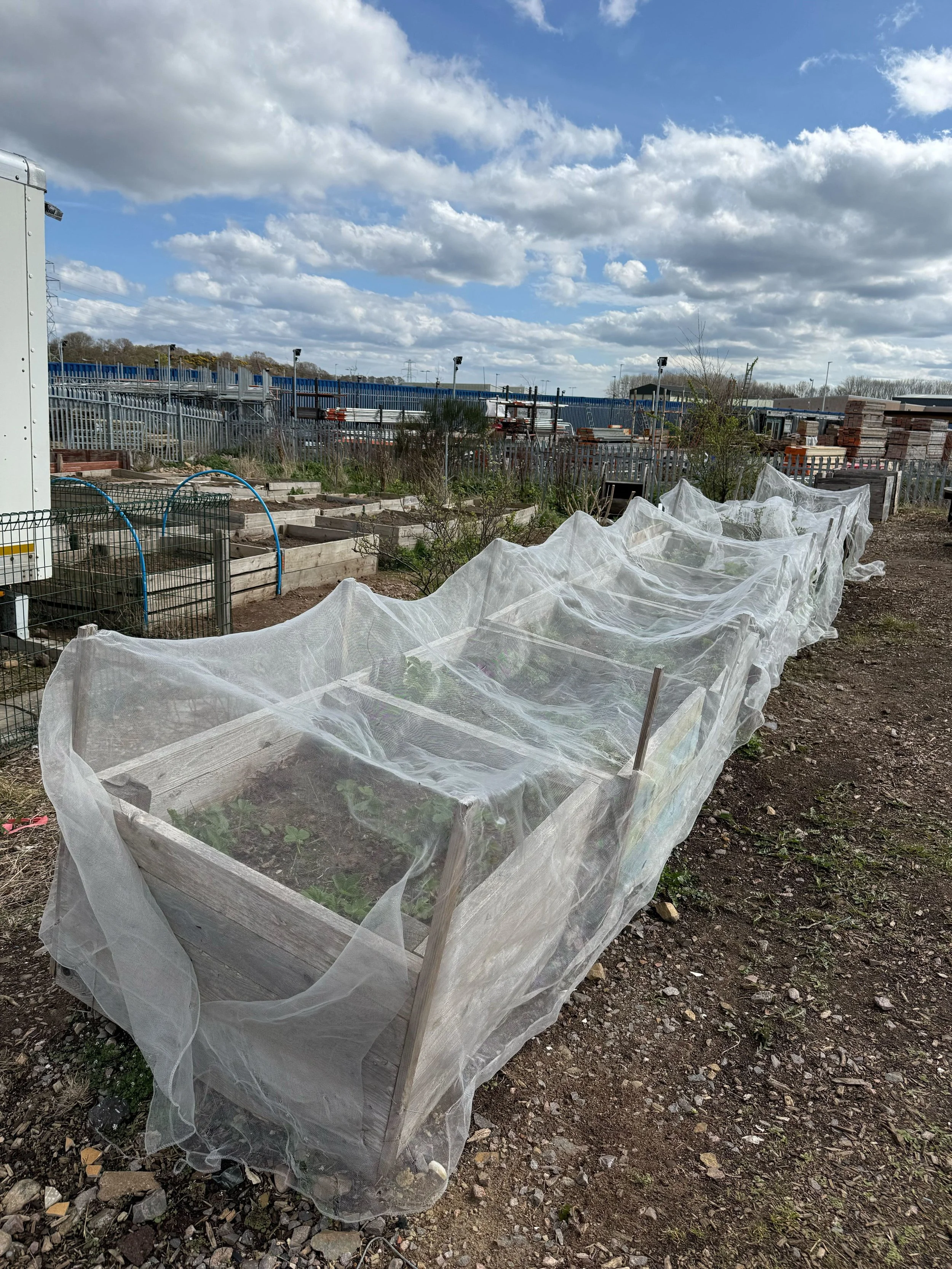
The Community Payback Garden’s raised beds buzzing with life
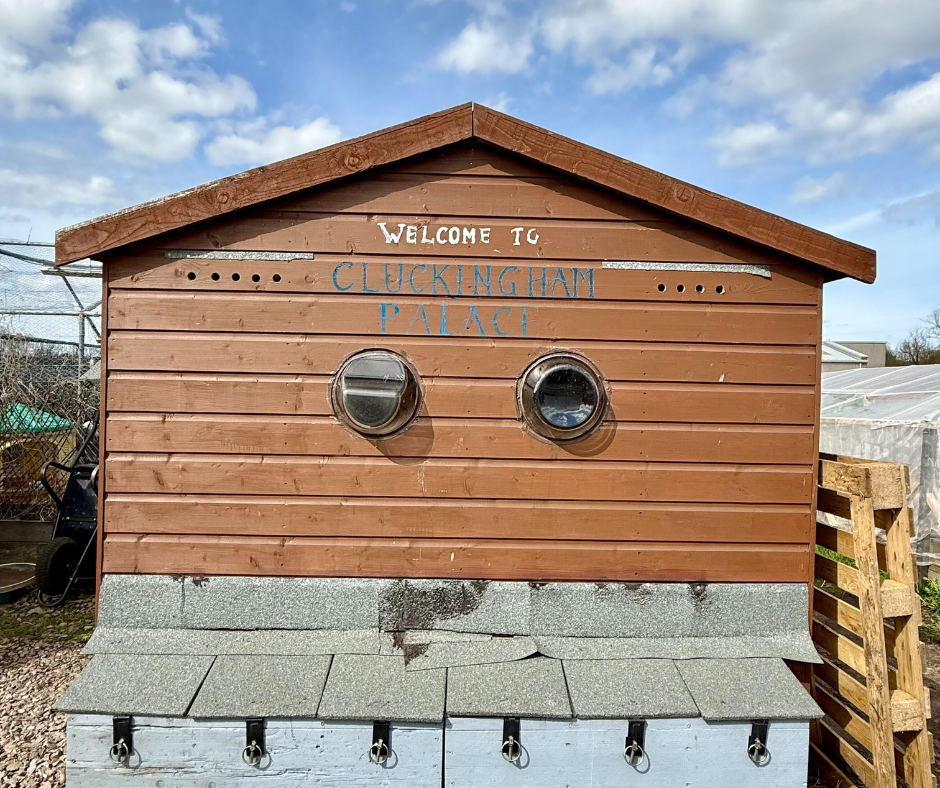
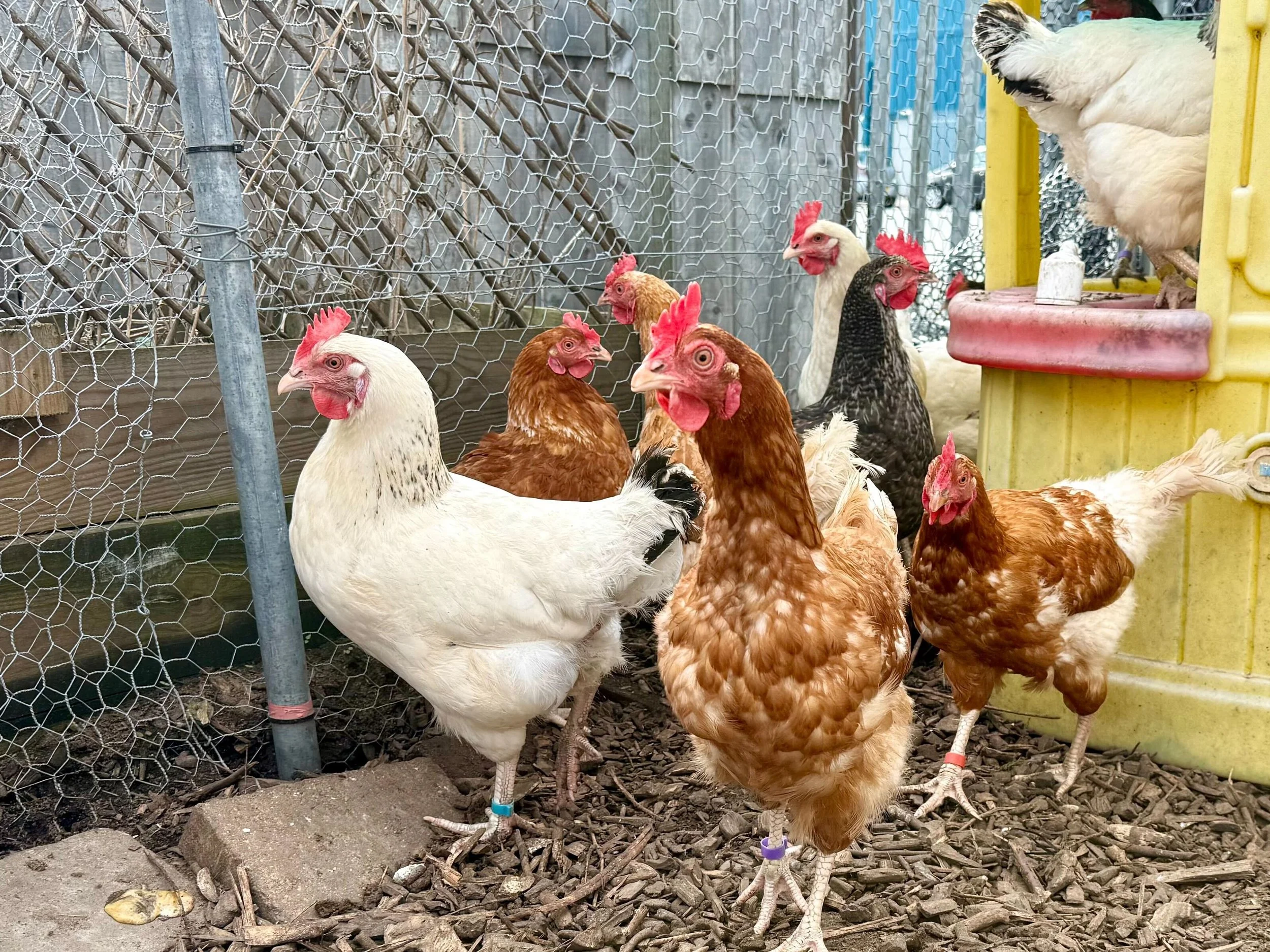
Then along came Crawford, just as passionate, who introduced us to one of the highlights of the day, the chickens. Fifteen of them. And yes, I got to go into the pen, affectionately known as Cluckingham Palace. Honestly, that alone made my day.
The garden itself is incredibly productive. In the polytunnel and beds, they’re growing everything from cucumbers and peppers to tomatoes, tatties and strawberries. Seedlings are already coming through, ready to be planted out. Nothing is wasted either, chicken manure goes into compost, and even crushed eggshells are used to keep the slugs at bay. We also talked about the potential to link in with the Moray CAN Community Growing Network. It feels like a natural fit, sharing knowledge, skills and support, something that could benefit everyone involved.
We then headed over to the workshop, where another side of the project comes to life. Benches and tables were being painted, getting a new lease of life before heading back out into the community. There’s something really satisfying about seeing items restored rather than replaced.
And then there was the boat.
Not quite NCIS Gibbs building-a-boat-in-the-basement level, but a playground-style one that’s clearly going to bring a lot of joy when it’s finished. Again, it’s that mix of practical skills and creativity that seems to run through everything they do here.
But what really stayed with me wasn’t just what they’re growing or making, it’s what people are learning.
The individuals coming through the programme don’t all arrive with knowledge or experience. In one case, someone was shown a strawberry plant and asked, “So if I dig that up, will I find a strawberry?”
And yet, not long after, you’ll hear those same people chatting about recipes and what they’re going to cook with what they’ve grown.
That’s some journey.
And what really struck me was how much the team care about the people they’re working with. This isn’t just about completing hours. In many cases, they are actively trying to help individuals break the cycle that led them there in the first place, building confidence, routine, and skills that last far beyond their time on site.
It made me realise just how wrong my assumptions about community payback had been.
And it doesn’t stop at the garden.
The food doesn’t just stay here either. It goes on to Moray Food Plus, where it’s used to help families learn how to cook simple, healthy meals, sometimes from scratch, sometimes for the first time.
The Community Payback team are out and about across Moray — cutting grass, painting halls, building fences, supporting local projects. They’ve been involved in things like the Christmas trees project and even restoring benches from the old Lossie bridge.
And I found myself wondering… how did we not know this?
How have we missed the scale, and the value, of what’s happening here?
Because this isn’t just “paying back”.
This is people being given a chance to build something. To learn. To contribute. To leave something better behind.
And that feels like something worth talking about.